

Historical facts, legends, mythology, and traditions of Kathmandu Valley reflect an enriched culture, rituals, the most precious heritages, and their stunning architecture. During the Lichchhavi and Malla dynasties, Nepal made significant progress in art and culture. The legacy of those eras continues in the present in the Durbar Square of Kathmandu, Patan, Bhaktapur, and other heritage sites of Kathmandu Valley. Kathmandu witnesses wonderful festivals throughout the year. The Newar communities are committed to preserving their culture, following the same rituals as it was celebrated in the past. During these festivals, the dubar squares are transformed into an open theatre where mythology, culture, and community blend into unforgettable spectacles. Here are five festivals that transform Kathmandu’s heritage squares into living stages of tradition and devotion.
1. Indra Jatra – When the Gods Descend upon Kathmandu
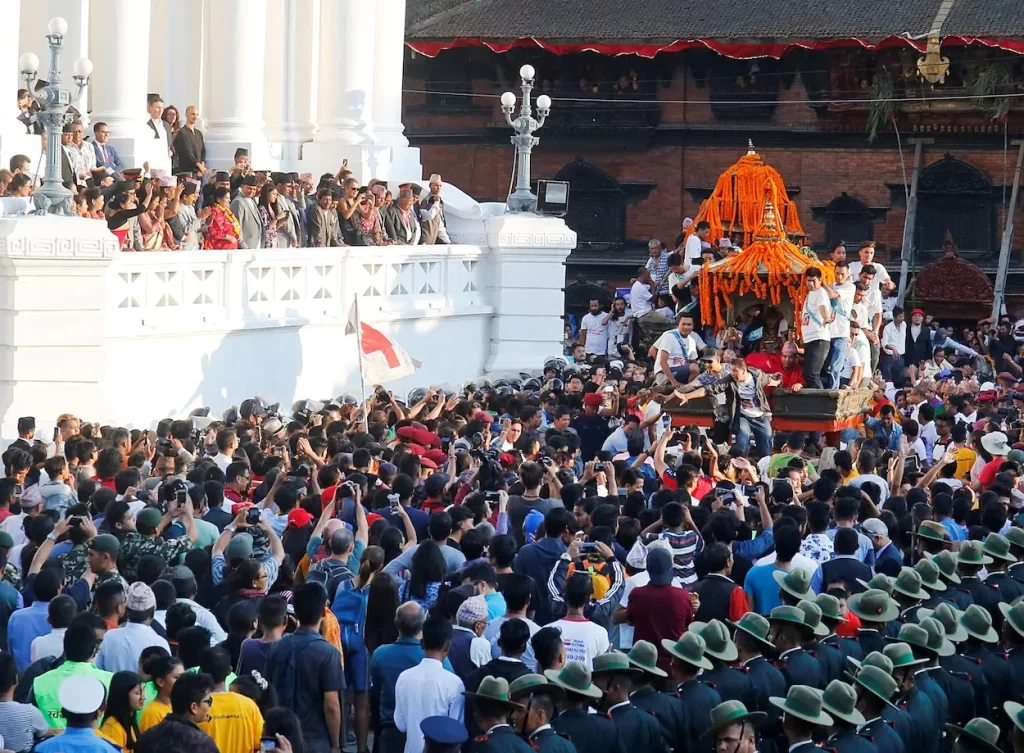
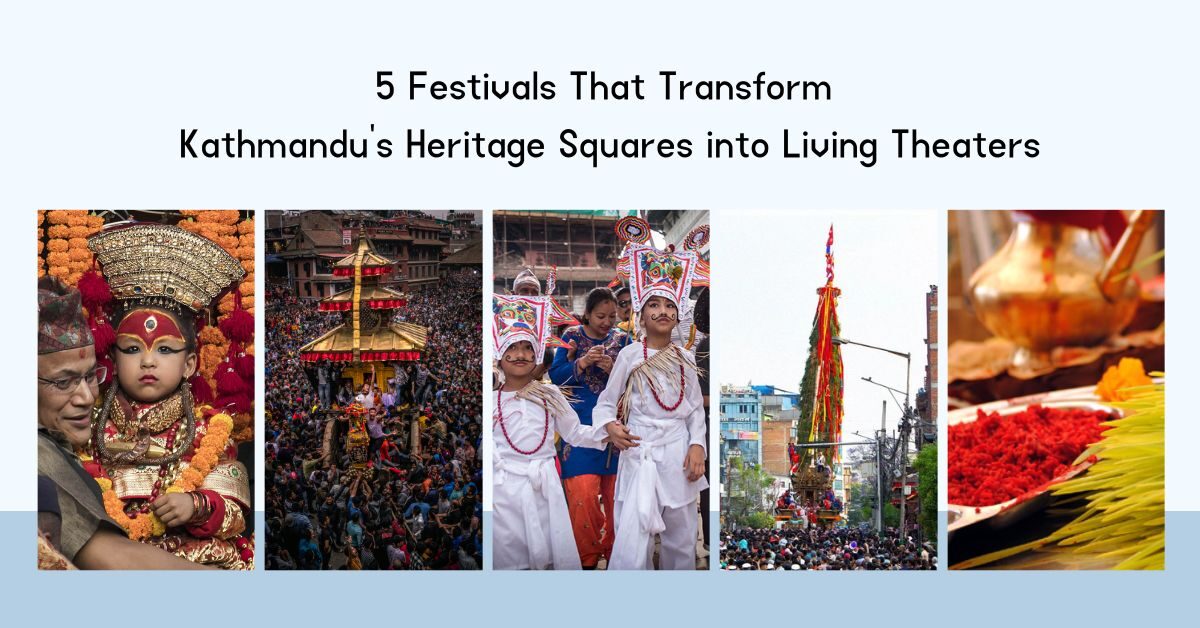
Indra Jatra is celebrated in honor of Indra(the Hindu god of rain) in September for a week-long celebration in Kathmandu. During the festival, the chariot of Bhairav, Ganesh, and Kumari(the living goddess) parades through the streets of Kathmandu Durbar Square. Indra Jatra symbolizes the end of the monsoon and the beginning of the harvest season. The festival is as much a religious and cultural celebration as it is a living museum of Kathmandu’s rich Newar traditions. During a week-long festival, the Lakhe dance, wearing masked demons and deities, perform fierce dances. The procession of iconic Pulukisi(elephant) dances through the streets. The square becomes a stage for divine plays, where myth and reality merge under the glow of oil lamps.
2. Biska Jatra – Chariots, Chaos, and Community in Bhaktapur

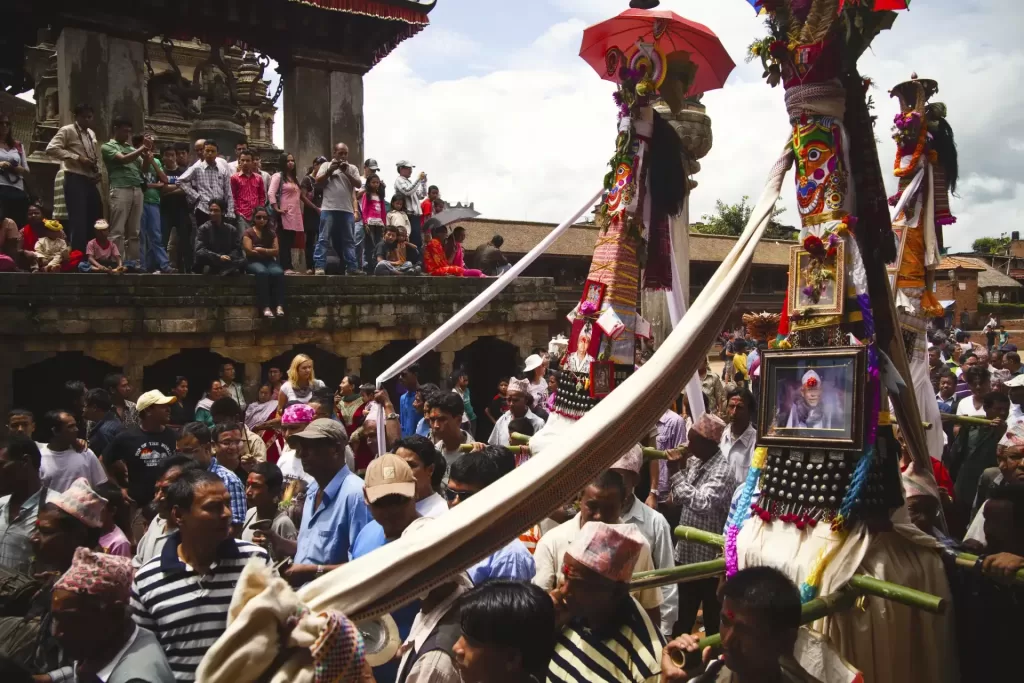
Biska Jatra, commonly known as Bisket Jatra, is celebrated to welcome the new year based on the lunar calendar. The festival is celebrated for more than seven days in different sections of Kathmandu Valley. The main events of Biska are performed in the premises of Bhaktapur Durbar Square. The massive crowd around the durbar square cheers while the gigantic chariot of Bhairav and Bhadrakali is dragged through the narrow alleys and onto the open space of Durbar Square in a dramatic tug-of-war between neighboring towns. The thrill, excitement, joy, and feelings of community pride are evident in the competition and devotion during the events. The next day of Biska is the Tongue-piercing rituals, and the event is organized in Thimi. The festival turns Bhaktapur into a battleground of divine energy and human devotion. Kathmandu festival tour, Nepal cultural tour, and Nepal Photography tour can be organized during the New Year festival. The temperature and weather are moderate, as the sky is blue and the flavor of spring is still in the air, making this festival more vibrant and joyful.
3. Gai Jatra – A Parade of Laughter Through Sorrow
During August, after the paddy plantation, farmers are quite free, and they organize several events to entertain the community. Gai Jatra or Cow Festival is one of the entertaining events in the Kathmandu Valley, which Malla king Pratap Malla introduced in the seventeenth century. To give relief to the queen, who not only lost her son, but also thousands of others lost their loved ones. To transform sorrow into joy as life goes on, people started to celebrate this festival to remember their loved ones. The young boys dressed as cows participate in a mass procession in the alley of Kathmandu, Bhaktapur, Patan, and many other places in Nepal. During this day, the crowd gathers in the Durbar Square to observe the “Gai Jatra” along with satirical performances regarding the political system, social imbalance, and social structure.
4. Machhindranath Jatra – The longest chariot Festival
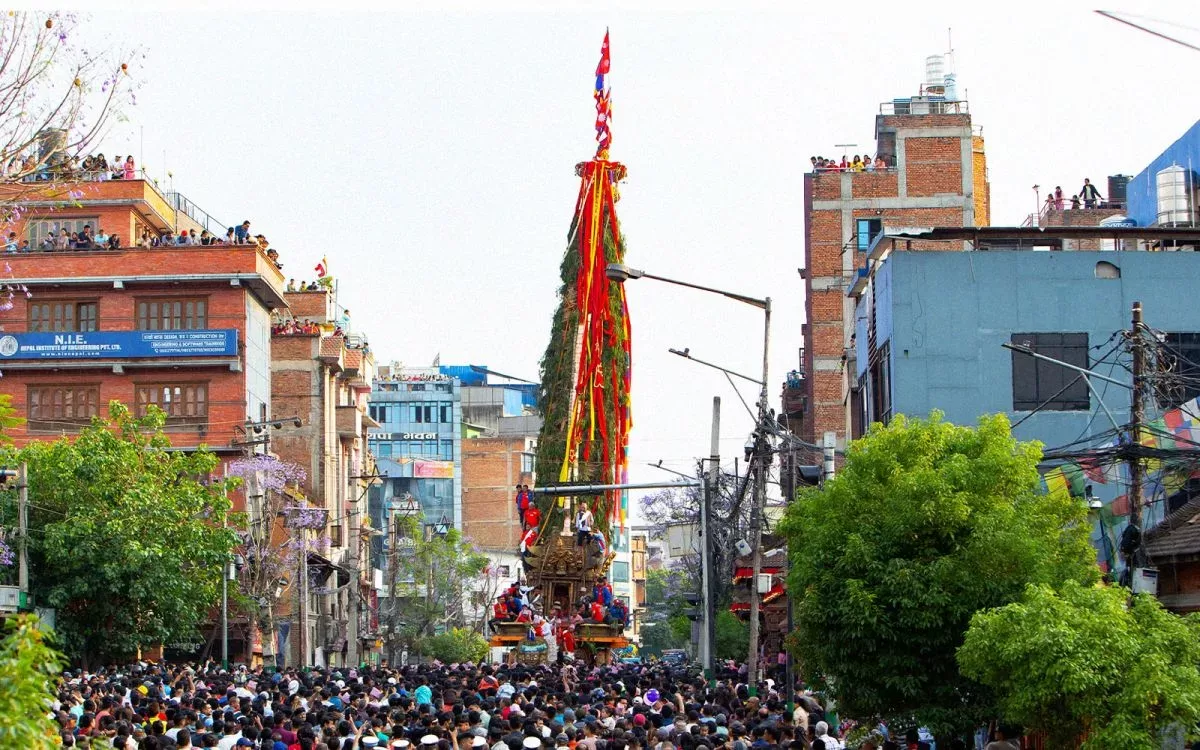
The Rato Machhindranath is considered a god of rain and harvest. Once Kathmandu faced the longest dry season without rain, farmers requested to find a solution for rain to the King of Patan City. When the king invited Machhindranath to visit Kathmandu, along with him. Machhindranath accepted the request and came to visit Kathmandu. When he reached Kathmandu, Guru Gorakhnath stood at his feet to greet his teacher; instantly, all the snakes were released, which resulted in rain in the valley. To honor the Machhindranath, every year, Patan city celebrates a month-long chariot festival. The towering 60-foot-tall wooden chariot was built and carry the idol of Machhindranath is pulled across the alleys of Patan city. The huge crowd, musical bands, Lakhe dance, and chanting of devotees create the surroundings of Patan city as a live theatre. The month-long chariot procession ends at Jawlakhel after displaying the sacred vest to the public, resolving an ancient myth. Rato Machhindranath tour is one of the longest tours organized in Kathmandu Valley, which is based on the lunar calendar. During this festival, Photography tour, educational tour, and cultural tour are suitable for students who wish to learn Nepali culture and traditions.
5. Dashain & Tihar – When the Squares Glow with Devotion
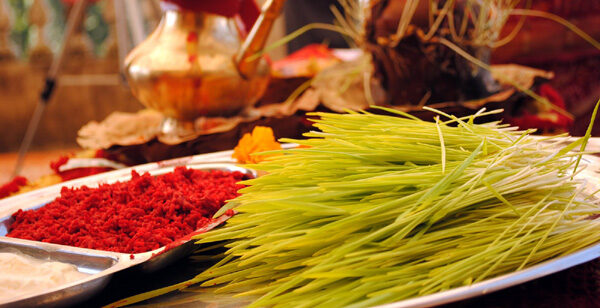
Dashain and Tihar are the main festivals of Nepal. These festivals are celebrated nationwide in different styles based on the community and region. These festivals fall in Autumn, which is the busiest tourist season in Nepal, especially for trekking and climbing. Nepal Photography tour is ideal during this festival time, one can capture the color of festivals along with adventure. Temples in Kathmandu are open for special worship of the goddess Durga in different forms. Temples like Taleju in Kathmandu Durbar Square open for only one day during Nawami in Dashain. Dshain is especially focused on gathering family and eating delicious food, despite worshipping the goddess Durga. Tihar, known as Deepawali, is a colorful festival of light and flowers. People enjoy playing Deusi-Bhailo at night with music and dance.
Festivals are the lifeline of Kathmandu Valley as they guide people to live. The enriched heritages of Kathmandu Valley, along with legends and myths, make every festival unique and wonderful. The squares, courtyards, Bahal, and narrow streets of the Kathmandu valley possess at least one temple, which has significant value in their daily lives. During these festivals, these temples are decorated and perform special puja, which transforms each corner into a live amphitheater. Whether it’s the fierce energy of Bisket Jatra or the satirical wit of Gai Jatra, these festivals keep Nepal’s traditions alive in the most spectacular way. These festivals don’t just entertain—they embody the living heritage of Kathmandu Valley. When the ancient stones of Durbar Squares echo with drums, dance, and devotion, they remind us that these aren’t just historical sites; they are breathing cultural canvases. For visitors and locals alike, witnessing these festivals is not just about seeing tradition—it’s about living it. To know more about the festivals of Nepal, please follow the blog section.
Leave a Reply