Quick Questions? Email Us
[email protected]

Talk with an Expert (Indra)
+977 – 985 123 4552

Gaijatra Festival tour

5 Days
Gaijatra Festival in Bhaktapur

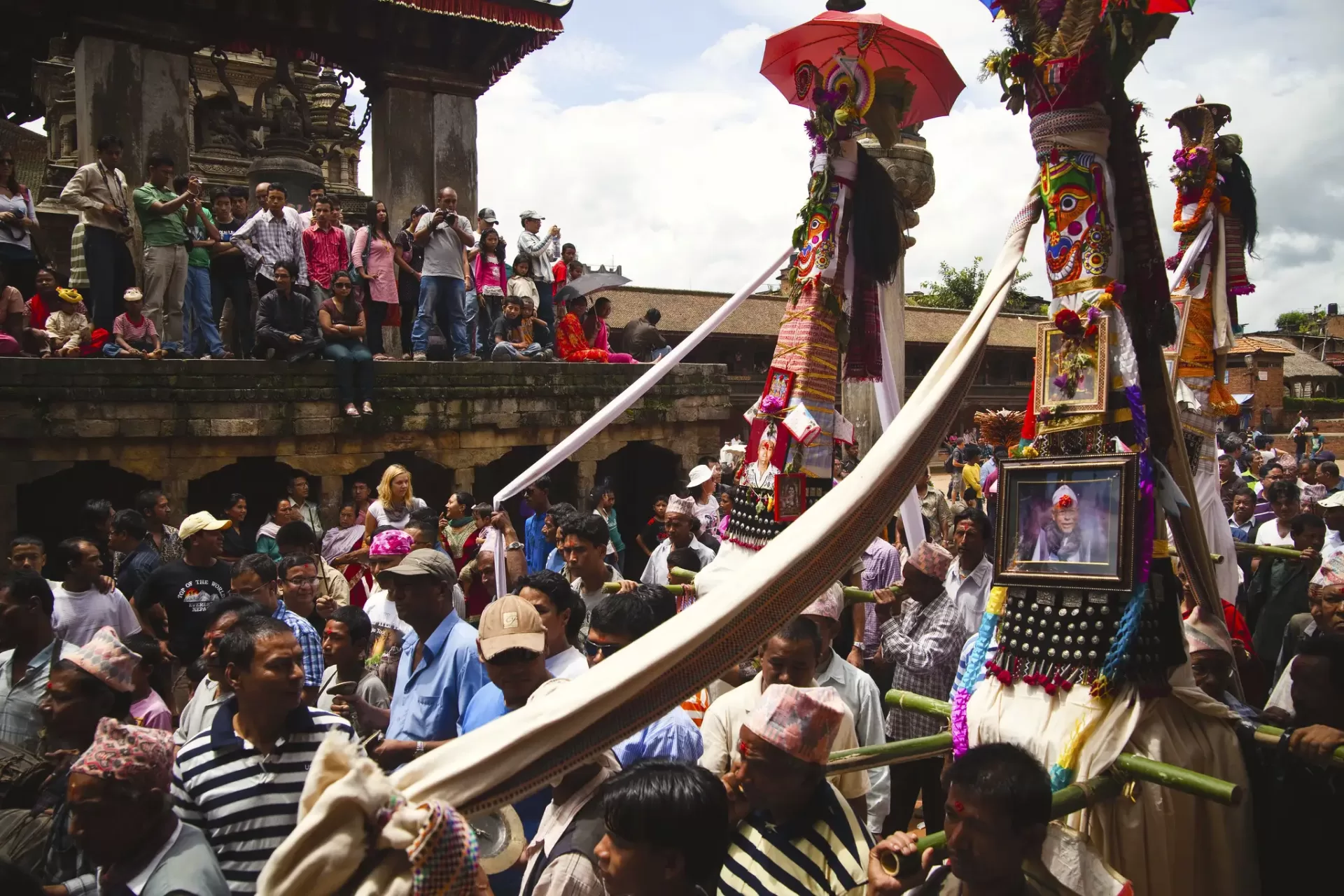
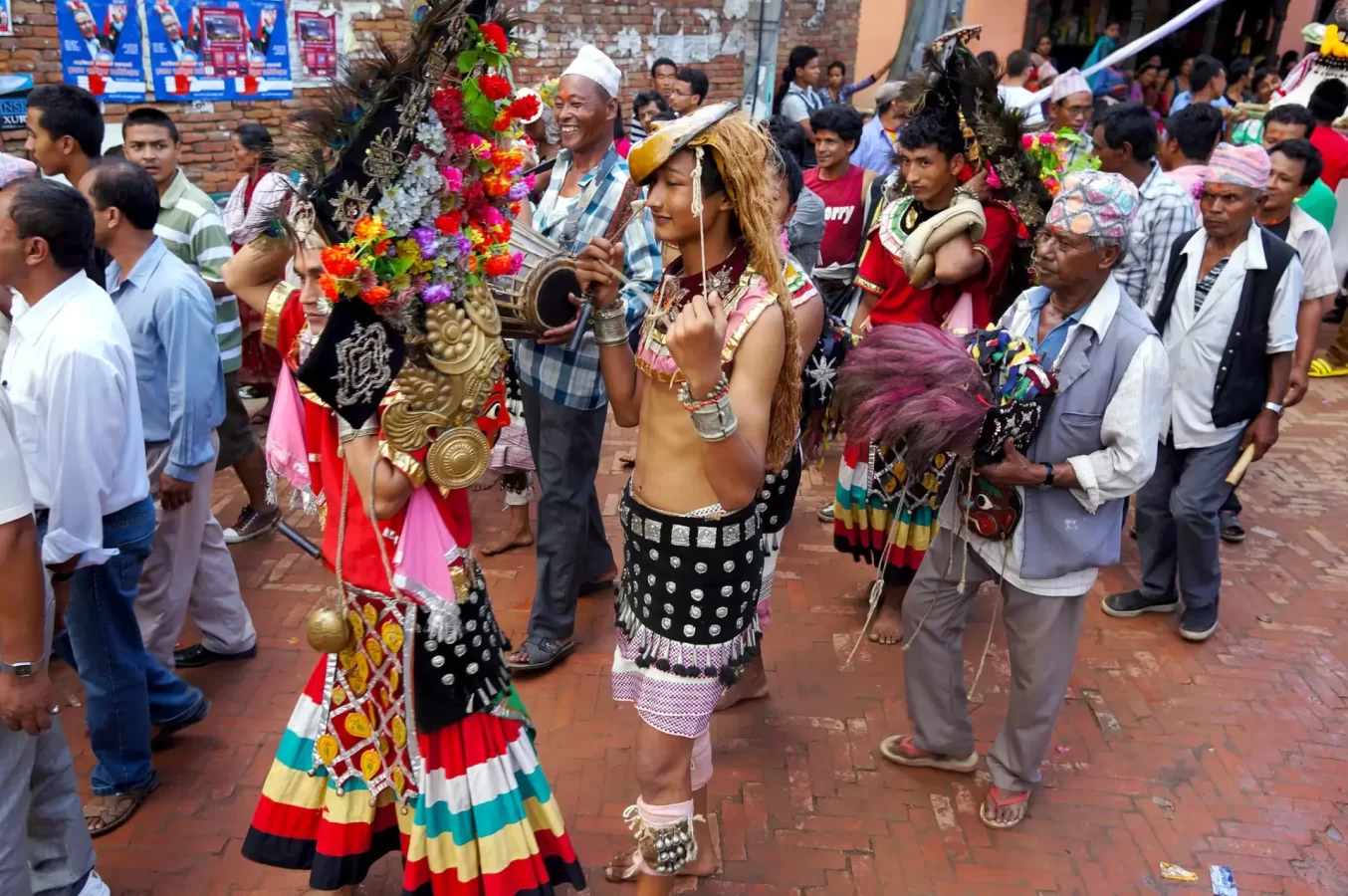
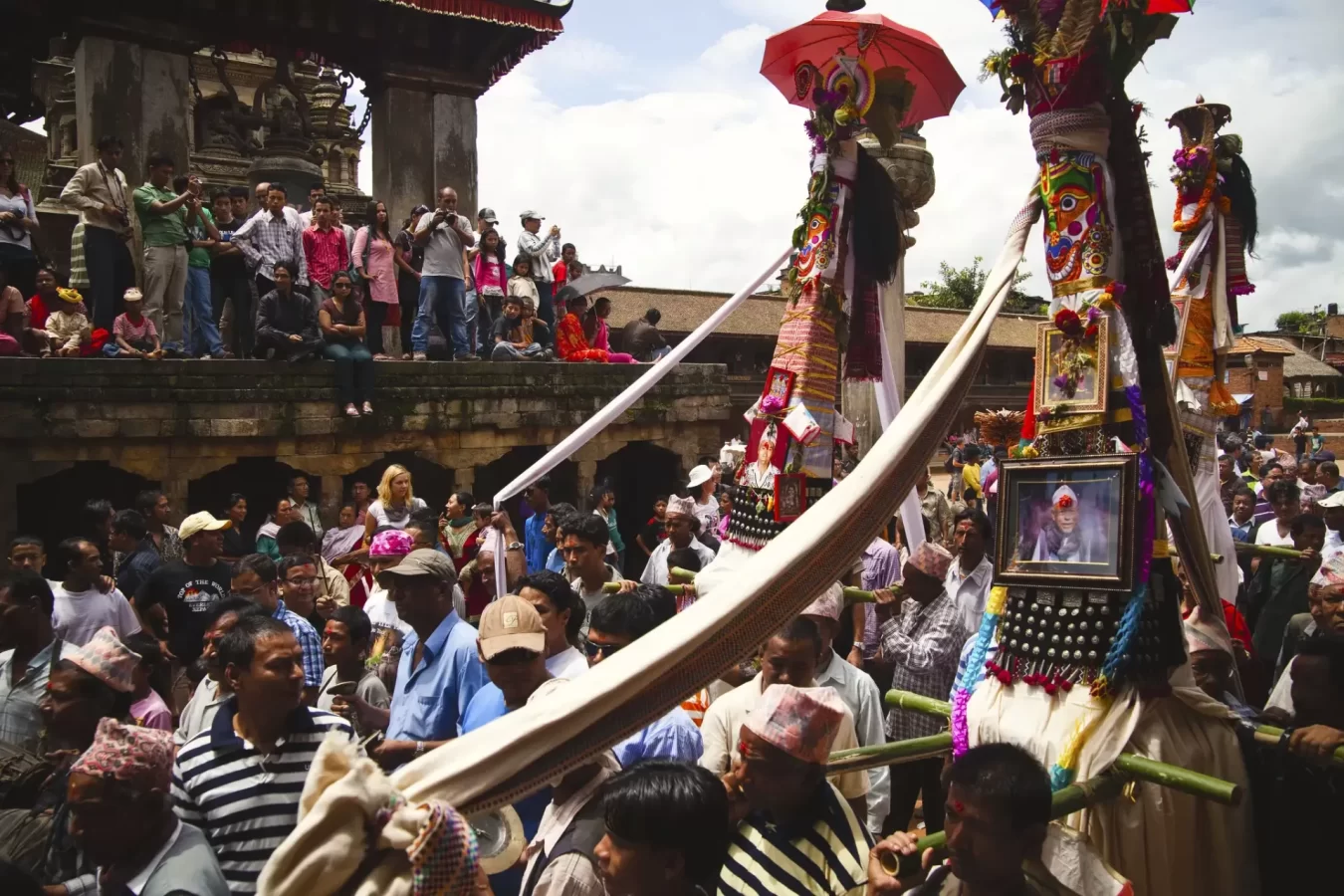
The Gai Jatra Festival tour is a wonderful experience for tourists as it is celebrated in the Kathmandu Valley mainly by the Newar community. The festival is celebrated in memory of their relatives who died in the previous year. Children dressed as cows and Jogi parade around the city. The Gai Jatra festival is celebrated based on the lunar calendar, which normally occurs during August and September. Gai Jatra was introduced by King Pratap Malla to help her queen from the grief of her son’s untimely death. Gai Jatra is a religious and cultural event of the Newar in Nepal

Kathmandu Valley and other cities such as Palpa, Bandipur, and Banepa, where the Newari community lived for centuries, celebrate Gai Jatra. Kathmandu Durbar Square is the center point to start this festival procession. People who dress as cows march throughout the alleys of Kathmandu Durbar Square. Local clubs, families, and other social groups play local musical instruments in the alleys of Kathmandu, Patan, and Bhaktapur

 People keenly watch the process and distribute fruits, juice, sweets, and other food items to the participants. Nowadays, satire, jokes, and different attire are worn to make the events more colorful and fun. Bhaktapur city celebrates in several ways, including a chariot procession and cultural dance last for a week. The Ghintang Ghisi dance is celebrated for almost a week, from the day of Gaijatra to Krishna Janmashtami. The dance is done in a long queue with two persons in a row, hitting each other’s sticks. Many cultural shows are performed, and many nearby villages even participate in the festival
  • Festivals of cows in memory of beloved one
  • Wonderful experience of Newari culture and tradition
  • Experience Local Cuisine
  • Historical exploration of Kathmandu Valley
  • Heritage tour
Day 01

Day 1: Arrival in Kathmandu

Upon your arrival at TIA Kathmandu, one of our office representatives welcome you and assist you in transferring to the designated hotel. Overnight stay at hotel.

Day 02

Day 2: Explore Kathmandu Durbar Square and Observe the Gai Jatra Processions

After breakfast, we will walk through Thamel following the streets of the city’s inner core area to reach Durbar Square. We may see a small group of people marching towards Durbar Square being dressed as cows and Jogi. We will explore courtyards, Kumari temple, Kal Bhairav, and several temples and monuments around Durbar Square. After exploring all these temples and courtyards, we go to the rooftop restaurant to have lunch and observe the Gai Jatra from the rooftop. We will enjoy the colorful Gai Jatra processions, where people dress up in unique costumes and paint themselves with vibrant colors. We can have a Photographic session of lively atmosphere, music, and dancing in the streets.

Day 03

Day 3: Explore Patan Durbar Square and Bhaktapur Durbar Square

Begin our exploration at Patan Durbar Square, a UNESCO World Heritage Site. Marvel at the exquisite Newari architecture, including the Krishna Mandir, Bhimsen Temple, and the Golden Temple. Admire the intricately carved wooden windows and doors that reflect the artistic prowess of the Malla period. Likewise visit the Hiranya Varna Mahavihar, commonly known as the Golden Temple, an architectural masterpiece adorned with golden artwork. Immerse yourself in the serene ambiance and observe the Buddhist rituals taking place in this sacred site. Explore the Mahabouddha Temple, a unique terracotta shrine known for its intricate details. The temple, adorned with thousands of miniature images of Buddha, provides a tranquil setting for reflection. The Patan Museum is a collection of Nepali art and artifacts. You can notice the unique craftsmanship of Newar in Kathmandu Valley. After lunch, we will explore around Durbar Square premises to observe and understand the Newari architecture which is showcased in 55-Window Palace, Nyatapole, and a short visit to the Museum. We will visit Pottery Square to observe the traditional pottery-making industry. At the same time, we will observe the Ghintang Ghisi dance which is performed during the Gai Jatra festival.

Day 04

Day 4: Heritage tour of Swoyambhunath, Bouddhanath, and Pashupatinath

Early in the morning, we will have an hour’s walk to reach Swoyambhunath Stupa (Monkey temple), explore around Monkey temple, and enjoy the hundred eighty-degree view of Kathmandu city from Swoyambhu Hill. Back to the hotel by car freshen up and have breakfast. After breakfast, drive to Bouddhanath Stupa, which is another UNESCO World Heritage site. Observe the calm and eternal peace around Stupa. You can buy Thangka paintings and other gift items around Stupa. Visit the monastery attached to the premises of Stupa. We will have lunch around Stupa and then drive to Pashupatinath temple. We will observe the eternal peace around the temple. We will sit opposite to temple to observe the cremation going on the bank of the Bagmati River. In the evening, stroll around Thamel and enjoy a farewell dinner followed by a Nepali cultural show.

Day 05

Day 5: Departure

One of our office members will assist you in transferring to the Airport 3 hours before your scheduled flight.

Included

  • All ground transportation.
  • Accommodation based on B&B basis
  • Farewell dinner
  • Entrance Fees
  • A comprehensive medical kit
  • Administrative cost and Staff Salary(Guide Salary)

Not Included

  • Lunch & Dinner
  • International air Tickets, Insurance, and Nepal Entry Visa Fee
  • Alcohol, personal expenses, and equipment
  • Tips (Not Mandatory but taken as respect)

Quick Facts

Destination Nepal
When?

Celebrated in August, the day after Raksha Bandhan

Where?

Primarily in Kathmandu Valley and the Newari community region of Nepal

Dedicated to:

The festival is organized in memory of their relatives who died in the previous year.

Key Highlights:
  • Children dressed as cows and Jogi parade around the city. Masked Dances: Lakhey dance with traditional Newari music
  • Traditional music: Played by Newar communities with drums and flutes.
Who Celebrates:

Predominantly celebrated by the Newar community, but widely attended by people from all ethnic groups and even tourists.

    [dynamichidden page-title CF7_get_post_var key=’title’]