

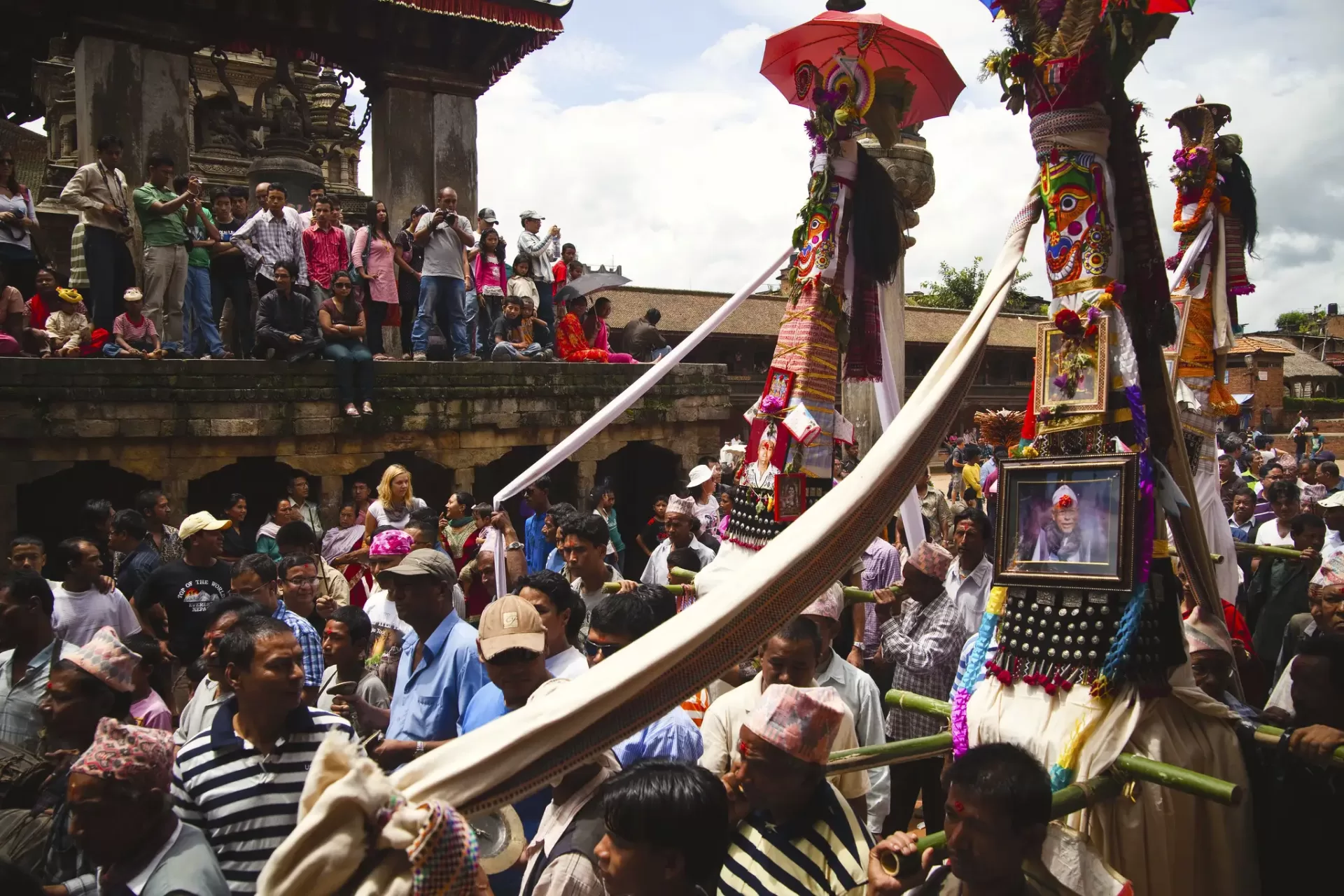
Kathmandu Valley is a living museum of culture and traditions. During the rainy season, Nepal observes several festivals full of entertainment, agriculture, Hinduism, and Buddhism. Guru Purnima, Nag Panchami, Janai Purnima (Raksha Bandhan), and Gaijatra normally fall in July and August. Gaijatra is one of the major festivals celebrated in Kathmandu Valley and its surroundings. Primarily, Gaijatra is celebrated by the Newar community in Nepal. This festival is celebrated Outside Kathmandu valley, where the Newar community resides. Gaijatra is a colorful festival celebrated in honor of departed souls with laughter, satire, and creative expression. Annually, a unique and colorful procession is organized in the alley of Kathmandu Valley and outside Kathmandu, where the Newar community resides. This iconic festival is dedicated to the loved ones who departed the previous year. Within Kathmandu Valley, Kathmandu, Patan, and Bhaktapur celebrate this festival in different styles, even though the festival’s spirit is the same.
When Is Gaijatra Celebrated?
The next day of Janai Purnima is the Gaijatra, also known as the “Cow Festival,” which is observed on the first day of the dark fortnight (Pratipada) in August. In the middle of the monsoon season, all agricultural work has already finished, and people are getting rest and relaxing by celebrating festivals. The procession takes place in the premises of Durbar Squares of Kathmandu, Patan, Bhaktapur, and other small towns such as Kirtipur, Thimi, Sankhu, Tokha, Bungmati, Khokana, and many other places witness this grand festival colorfully and vibrantly. In 2025, the Gaijatra festival will be celebrated on the 10th of August.
The Meaning Behind Gaijatra
The meaning of Gaijatra is the procession of the cow. The two words “Gai” and “Jatra”, when combined it become “Gaijatra”, which means the festival of the cow. The cow is the national animal of Nepal, and it has a significant place in the Hindu religion. It is believed that cows help to take the soul to heaven. Due to this belief, people lead a cow in the procession through the streets in remembrance of beloved ones. If incase cow is not available, a young boy dressed as a cow participates in the procession as a substitute. These days in the city, cows are not easy to get, so families’ younger boys dress up as cows and participate in the procession.

Historical Origins: From Grief to Satire
King Pratap Malla was a wise king of Kathmandu, and his contribution to art and culture remains to date. He made the tradition of Gaijatra institutionalized in Kathmandu in the 17th century. He lost his son at an early age, which made her queen sad. To give consolation to the queen, the King invited all families who had lost someone to parade before the royal palace. Along with the procession, people were encouraged to dress in humorous costumes, perform dances, and present satire, all to help the queen—and others—find comfort in shared loss and laughter. The event continued in the following years, which finally transformed into a culture. These days, Gaijatra has become more critical and satirical of the state and political leaders. A special comedy show full of laughter and satire performs in the public sphere.
How Gaijatra Is Celebrated Today
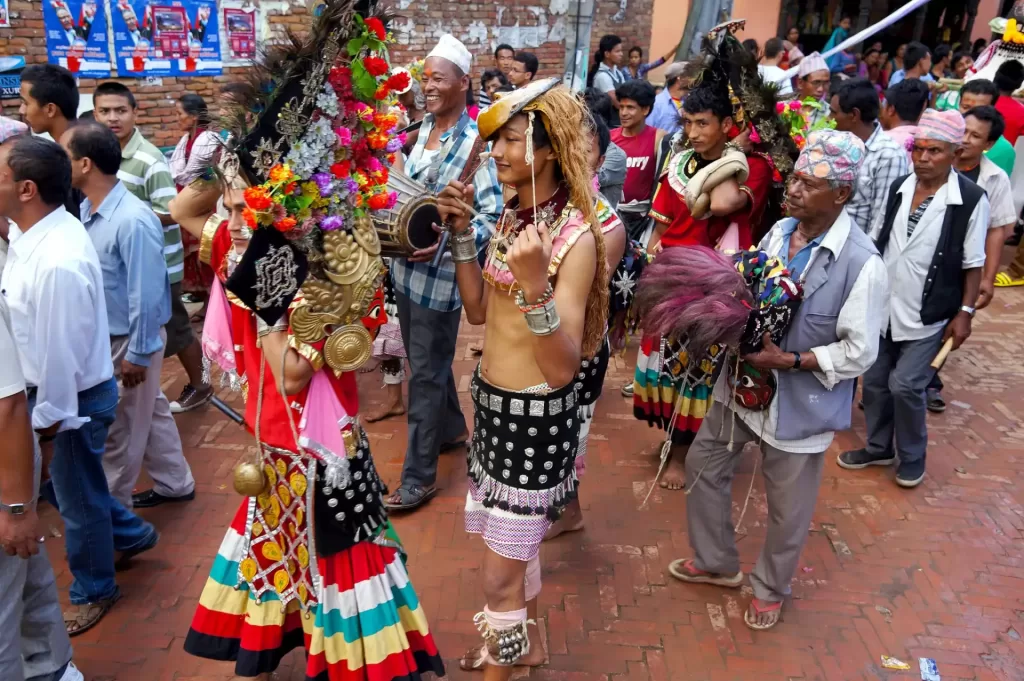
Gaijatra is celebrated with processions, traditional music, dances, costumes, and public performances—all infused with humor and creativity. Though it has several forms based on locations. Kathmandu witnesses the Gaijatra procession with traditional music, colorful dresses as deities, and humorous copies of political leaders. At the same time, Bhaktapur follows the typical traditional way of celebrating Gaijatra, and the streets of Bhaktapur are filled with masked dances, folk music, and families create tall bamboo structures adorned with a photo of their lost one in the previous year. Patan city has a smaller procession but is vibrant with cultural shows.
Finally, Gaijatra is about sharing sorrow and healing. It offers a space for all families to come together and share their grief and make sure that they are not the only ones who have lost their loved ones. On the other side of Gaijatra, it is full of bold, unfiltered humor where people are free to criticize the political system, leaders, and public figures through satire and comedy, which turns into laughter and joy. Therefore, Gaijatra is a unique cultural practice continuing in Nepal where the streets turn into a stage, the audience becomes the performer, and the entire community unites in remembrance and resilience. This festival teaches us that mourning does not have to be silent or lonely, which could be more realistic with community bonding and an artistic approach that can help heal from mental trauma.
If you wish to participate in the Gaijatra festival tour, please write to us. If you want to know more about Gaijatra, that celebrated during the monsoon season, you may read another blog, Traveling Nepal During Monsoon: A Hidden Gem of Adventure and Culture.
Leave a Reply