

The people are busy planting rice during the monsoon season in Nepal. The beginning of the Monsoon brings festivals and joyful times, not only heavy rain. Kathmandu witnesses several colorful festivals during the rainy season. The surroundings of Kathmandu are transformed into lush greenery, making it an ideal time for Photography. The fleet of clouds flies in the nearer hills as it is in a hurry to meet its girlfriend. The ancient rituals are performed in the narrow alleys of Kathmandu, offering endless opportunities to capture stunning cultural moments. The heritage sites are transformed into a live stage during the festival day, where you can capture the crowds, chariot processions, musical dances, and colorful attire of the people.
Best Festivals for Photography in Kathmandu
1. Indra Jatra (September)
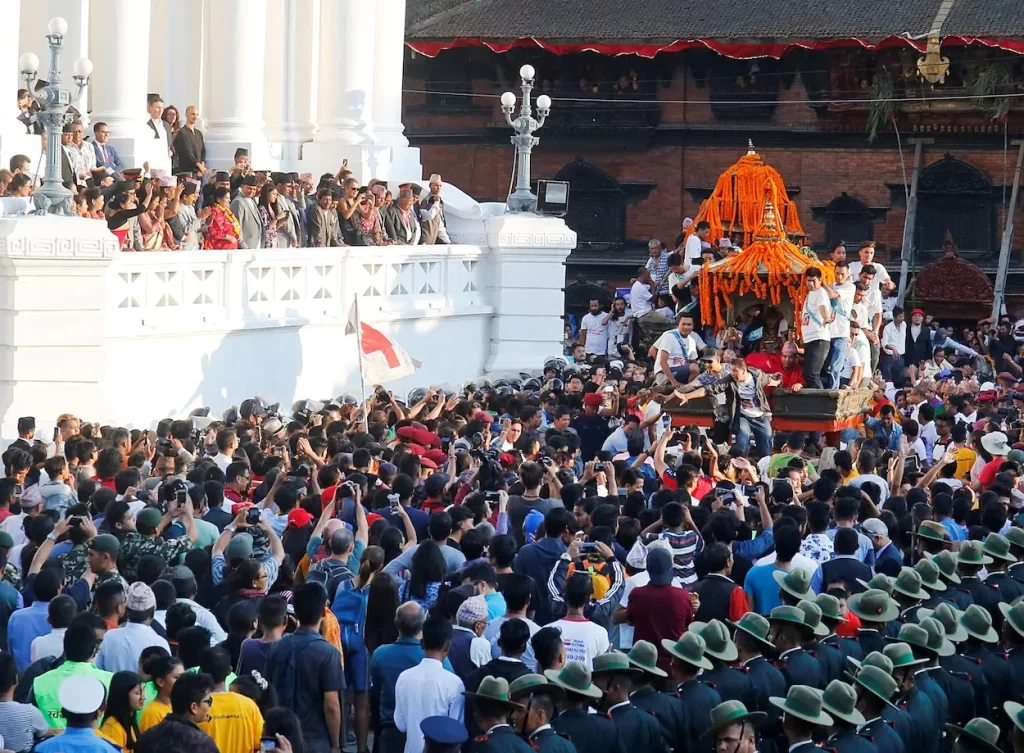
Indra Jatra is a colorful festival celebrated primarily in Kathmandu Durbar Square and its surrounding alleys. The festival is celebrated in honor of the Hindu god Indra Dev, also considered the god of rain. The chariot procession of the living goddess Kumari, Bhairav, and Ganesha is outstanding, as the colorful chariots and local musical bands are accompanied by masked dance performances in Basanta Durbar Square, one of the most visually spectacular festivals. The best spot for capturing the magnificent moment is in front of the Basantapur Durbar or the rooftop restaurant near Durbar Square.
2. Dashain (September-October)
Dashain is the greatest festival of Hindus celebrated all over Nepal. The festival is renowned for the devotion and blessings bestowed by the elders in the family. The Dashain festival is celebrated in honor of the Hindu goddess Durga and her various forms. The gatherings of family, special worship in Hindu temples, and animal sacrifice to Hindu Goddesses are its major activities. The weather is so pleasant during the Autumn season, people of different ages compete in kite flying. The traditional bamboo swings, the colorful attire of people in the various temples, red tika on foreheads, along with the yellowish barley jamara, are perfect shots for photography. A photography tour can be around Hindu temples, the Durbar Square courtyard, and an open space for people’s gathering, such as a swing playing zone.
3. Tihar (October-November)
Tihar is the second biggest festival celebrated in Nepal after Dashain. The festival is celebrated for five days, which is also called “Yam Panchak”. Tihar is a festival of lights and colors as people decorate their homes and offices with oil lamps, colorful designs combined with colors and flowers. The festival celebrates the crow, dog, cow, ox, and brothers’ day during these five days of celebration. Each day has its significance in the Hindu religion as well as in people’s lives. The brother and sister exchange their affection and respect by celebrating Bhai Tika on the final day of Tihar. The Photography during the Laxmi Puja night is special, along with oil lamps, colorful designs of rangoli, and garlands of marigolds. These days, electric bulbs of different designs are also used to decorate homes and offices. During Tihar, the Kathmandu Valley celebrates the new year based on the Nepal Samvat calendar. Tihar is an ideal time for street Photography and a cultural tour in Nepal. Within Kathmandu Valley, Indrachok, Ason, Mangal Bazar, and Bhaktapur city are the main spots to capture photos. The illumination around heritage sites and in residential areas is likely to make us spellbound.
4. Holi (March)
Nepal Holi Tour is another joyful festival for photographers who love to capture the color, music, friendship, and unity of the community in a single event. The holi festival is celebrated for two days in Nepal, the first full moon day in the hills of Nepal and the second day of the full moon in the Terai of Nepal. Kathmandu Valley witnesses the holi festival in various ways. The main center is Basantapur Durbar area, Thamel, Bhaktapur Durbar Square, Patan Durbar Square, and other vibrant small towns such as Khokana and Bungmati, where massive crowds celebrate the mega event using color powder, water balloons, along with local traditional music. The surroundings are highly energized, where hundreds of foreigners celebrate this spring festival in joy and excitement. During Holi, the Nepal Photography tour is an ideal package for professional and amateur photographers to capture this mega event, along with the Chitwan jungle safari tour.
5. Bisket Jatra (April)
During the late spring, Nepal celebrates its New Year based on the Lunar calendar, which is known as Bikram Samvat. During that time, the Newari festival Biska is celebrated in Bhaktapur city and its periphery. Biska or Bisket Jatra is an eight-day-long festival celebrated in the second week of April annually. The yoshin(Lingo), giant wooden chariot, and community involvement in tug of war make this festival exciting and joyful. The next day Thimi Sindoor Jatra and tongue piercing procession will be a wonderful experience for any individual. The myth, legends, and religious beliefs make this grand festival wonderful and prestigious in Kathmandu Valley. This festival is perfect for those who wish to learn and understand Nepali culture and traditions, along with a photography experience. Bhaktapur Durbar Square, Taumadhi Square, and Dattatrey Square are a few places to capture the moments of this festival.
Photography Tips for Kathmandu Festivals
1. Respect Cultural Sensitivities
- Take permission before photographing people, mainly in religious rituals.
- Do not disturb the ceremonies to take a shot
2. Gear Recommendations
- Wide-angle lens for crowded processions and landscapes.
- Fast prime lens (35mm/50mm) for low-light conditions and portraits.
- Zoom lens (70-200mm) for capturing details from a distance.
- Polarizing filter to reduce glare and enhance colors.
3. Lighting & Timing
- Golden hour (sunrise/sunset) adds warmth to festival shots.
- Use high ISO settings for evening rituals and processions.
- Experiment with slow shutter speeds for motion blur in dynamic scenes.
4. Capture Candid Moments
- Focus on emotions—devotees praying, children playing, dancers in motion.
- Look for contrasts: traditional attire against modern backdrops, light and shadow.
5. Stay Safe & Mobile
- Be aware of massive mass, make sure to secure your gear
- Use lightweight weight comfortable shoes and clothes for long hours of walking.
Best Photography Spots in Kathmandu
- Basantapur Durbar Square – The heart of Kathmandu’s festivals.
- Pashupatinath Temple – Spiritual rituals, sadhus, and cremation ceremonies.
- Swayambhunath (Monkey Temple) – Panoramic views and prayer flags.
- Bhaktapur Durbar Square – Ancient architecture and traditional festivals.
- Thamel Streets – Vibrant street life, markets, and cultural blends.
Best Times for Festival Photography
| Festival | Approximate Time | Highlights |
| Mahashivaratri | February | Around Pashupatinath Temple, Sadhus, and Devotees |
| Holi | March | Colors and joy at Basantapur and Thamel |
| Bisket Jatra | April | Giant chariot procession in Bhaktapur |
| Buddha Jayanti | May | Peaceful processions in Swayambhu and Bouddha |
| Gai Jatra | August | Satirical street parades and cultural dances |
| Gunla Parva | August-September | Devotional processions with traditional music |
| Teej | September | Women celebrate the festivals around the Shiva Temple |
| Indra Jatra | September | Kumari Rath, Lakhey dance, chariot processions |
| Dashain | October | Animal sacrifices, tika rituals, jamara blessings |
| Tihar (Deepawali) | November | Lights, rangolis, Bhai Tika, Laxmi Puja |
Tip: Always check the Nepali calendar or local festival schedules — dates shift every year.
Festival Photography in Kathmandu Valley is a photographer’s dream, which blends devotion, tradition, and human emotion. The Photography tour is not only capturing the events but also understanding the centuries’ legacy, preserving traditions, and immersing in the emotions of people’s patience, respect, and devotion to their culture and history. Whether you are a professional photographer or an amateur, your photos will describe the deep cultural resonance that is seen in the curious eyes of locals. If you have a passion for photography, Kathmandu’s festival awaits your lens.
Leave a Reply