

Kathmandu: The Vibrant Heart of Nepal
Kathmandu is the capital city of Nepal. Kathmandu’s significance remains to date, as it is the cultural epicenter of Nepal. The Himalayan country has several valleys enclosed by hills. Kathmandu Valley is surrounded by hills with lush forests and green vegetation. The ancient city blends cultural heritage with modern chaos. The beautiful snow-capped Gaurishankar Himalayan range, Jugal Himal, and Langtang Lirung Himal stand tall, witnessing the valley from its origin.
The Kathmandu Valley has been inhabited for the last 2000 years by several ethnic populations with strong Hindu and Buddhist influences. Kathmandu is a hub on the ancient Silk Road, which connected China and India, fostering a rich cultural fusion.
Historical and Cultural Significance
According to legend and several myths, Kathmandu was once a lake that was drained by the bodhisattva Manjushri, making it habitable land. During the Lichhavi and Malla era, the economy, culture, and architectural growth of temples and palaces flourished. The historical achievements stand tall in the seven UNESCO World Heritage Sites of Kathmandu Valley.
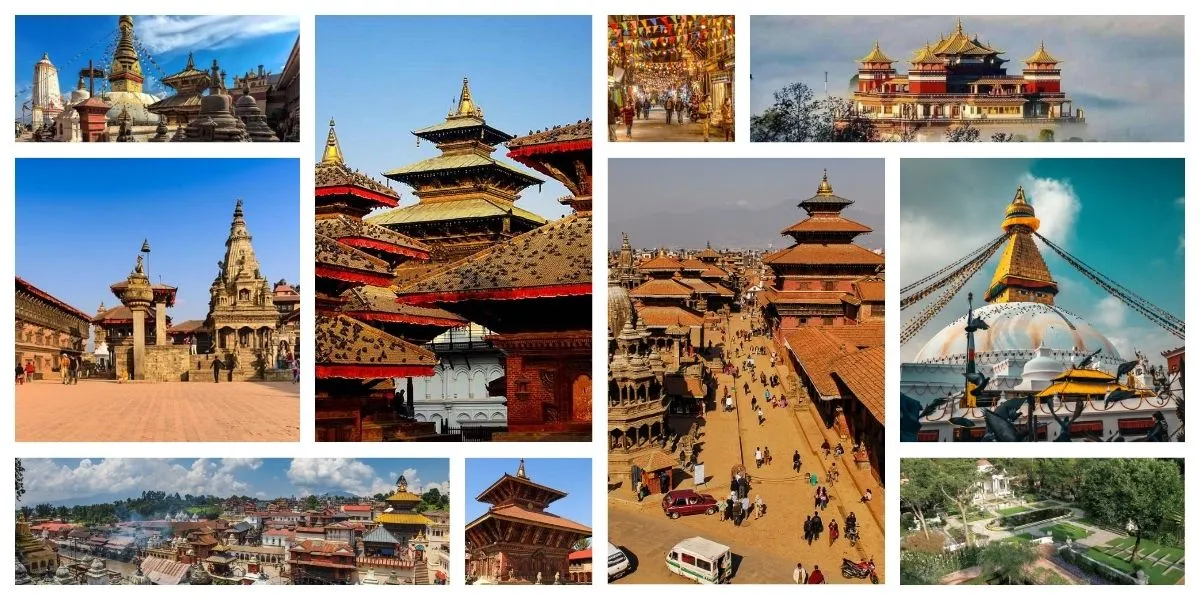
Kathmandu Valley is a living museum, a spiritual hub, a vibrant cultural tapestry, and a modern infrastructure that regularly draws the attention of tourists. Whether you are looking for a historical study, a spiritual seeker, or researching the traditional architectures of temples and palaces, Kathmandu is the ultimate destination for you. Here’s your curated list of the top 15 must-visit places in the Kathmandu Valley.
1. Bouddhanath Stupa
Bouddhanath Stupa is one of the seven UNESCO World Heritage sites located in the Kathmandu Valley. The largest spherical Stupa is the focal point of Tibetan Buddhism in Nepal and is on the ancient trading route between Tibet and India. The eyes in all directions spread calm and peace from the golden spire, while devotees encircled the base with mantras and revolving prayer wheels. The outstanding spiritual vibes that the visitors experience during their visit. For more, click here.
2. Swoyambhunath (Monkey Temple)
Swoyambhunath is significantly connected with the civilization of Kathmandu Valley. The origins of Swoyambhunath and Manjushree are shrouded in several legends and myths found in different Buddhist and Hindu religious texts. The Stupa is located in the west of Kathmandu, at the hilltop, offering panoramic views of the valley. The iconic stupa, adorned with Buddha’s eyes, is surrounded by shrines, temples, and, yes, plenty of holy monkeys. During 70s, the Monkey Temple was popular among hippies around the world. After the restrictions on marijuana in Nepal, Hippies still used to visit these iconic heritage sites to know the spiritual and vibrational energy of this sacred place.
3. Pashupatinath Temple
Pashupatinath is the national deity of Nepal. The temple is open to Hindus, and the surrounding premises are available for others to observe Sadhus and witness traditional cremation ceremonies. The temple is dedicated to Lord Shiva and is located on the bank of the Bagmati River. Around the premises of Pashupatinath, thousands of Shiva Lingams can be seen in several temples and in open areas easily.
4. Kathmandu Durbar Square
Kathmandu Durbar Square is a UNESCO World Heritage Site in Kathmandu Valley. The ancient city comprises several temples, courtyards, and splendid squares that reflect the Newari craftsmanship. During the Malla regime between the 12th and 18th centuries, palaces, temples, and other monuments were built in Kathmandu Durbar Square. The temple of the living goddess “Kumari” and the intricately carved wooden architecture of the Hanuman Dhoka Palace.
5. Patan Durbar Square
Patan Durbar Square is located in the Lalitpur district, which is south of Kathmandu city. This is one of the finest Durbar Squares in Kathmandu Valley, which showcases a masterpiece of Newari architecture where the sacred 21-pinnacles Krishna Mandir stands tall, with stone carving. The major attractions are the Patan museum, the golden temple, and Mahaboudha, where people can observe well-structured architecture and some of the best religious art in Asia.
6. Bhaktapur Durbar Square
Bhaktapur Durbar Square is popular for its well-preserved culture and ancient city. The iconic Nyatapole, 55-Window Palace, brick-paved narrow alley, and pottery squares are among the attractions around Durbar Square. The uniqueness of this small city is entirely different from the two cities of Kathmandu Valley.
7. Changu Narayan Temple
Dating back to the 4th century, this is the oldest temple in the valley and a UNESCO site. Located on a hilltop near Bhaktapur, it’s dedicated to Lord Vishnu and is famed for its exquisite stone, wood, and metal craftsmanship, telling tales from ancient Hindu scriptures. This is one of the oldest temples of Kathmandu Valley.
8. Kapan Monastery
People around the world who follow Buddhism visit the Kapan monastery for learning and meditation. This Tibetan Buddhist monastery is popular among European and American travellers. Anyone can enjoy the serene atmosphere, beautiful gardens, and stunning views, especially during sunrise.
9. Garden of Dreams
A serene escape from the city’s hustle, this neo-classical historical garden in Thamel is an oasis of peace. With its elegant pavilions, amphitheater, fountains, and perfectly manicured gardens, it’s the perfect spot for a quiet afternoon. People can spend their lunch time or have coffee in the evening.
10. Thamel
The vibrant street of Thamel makes this area special for every individual who visits Nepal and stays in Thamel. The energetic, tourist-centric hub of Kathmandu. Get lost in its labyrinth of streets brimming with trekking gear shops, quirky cafes, bookstores, live music venues, and restaurants serving cuisine from around the world. It’s the starting point for most adventures.
Leave a Reply